You've decided to manufacture cosmetics in Korea. You've Googled a few factories, maybe even received a quote or two. But here's the problem: how do you actually tell which manufacturer is the right one?
The same serum formula can cost USD 1.20/unit at one factory and USD 2.80 at another — with wildly different quality, lead times, and packaging support. Choosing the wrong factory doesn't just cost money. It costs months of delays, wasted samples, and products that don't match what you approved.
This guide gives you a structured, no-nonsense framework for comparing Korean cosmetics OEM manufacturers — based on what actually matters when you're spending real money.
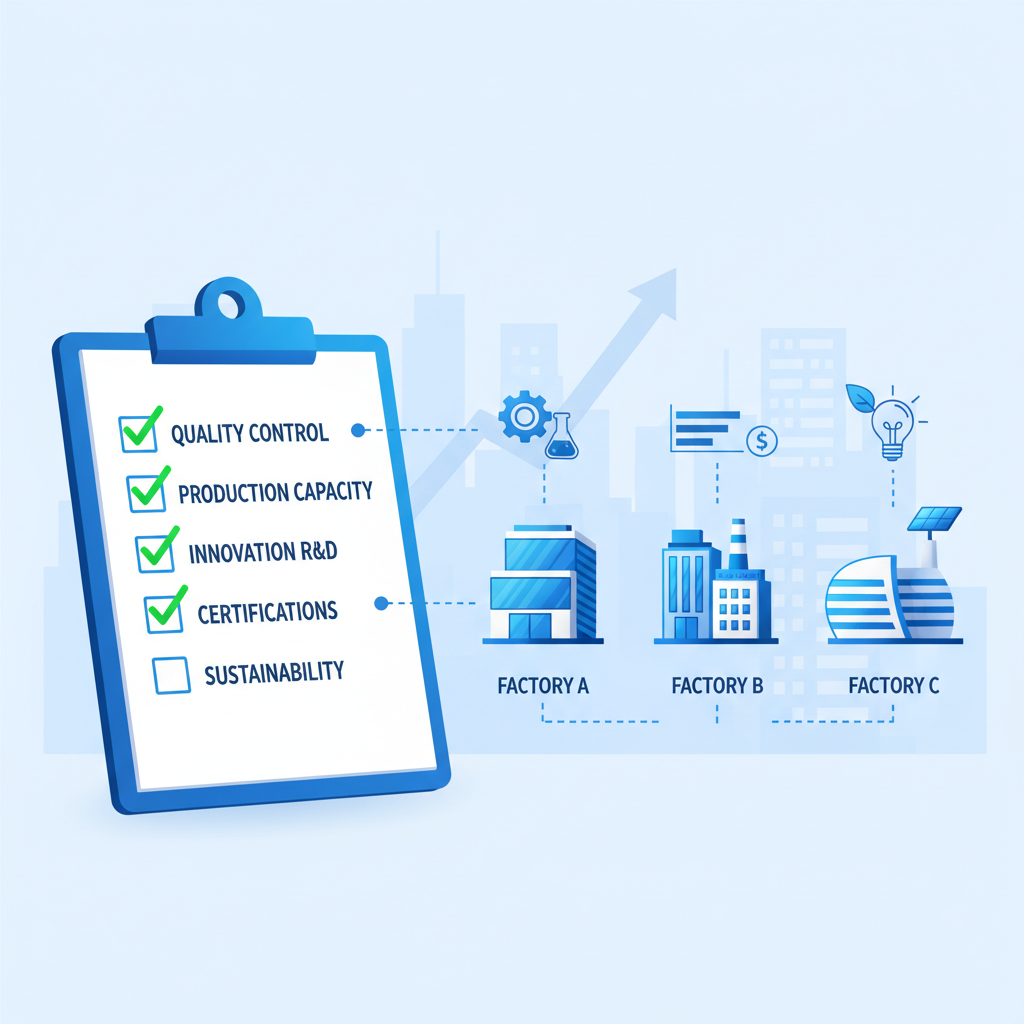
Why Comparing OEM Manufacturers Matters
Many first-time brand owners make the mistake of going with the first factory that responds to their inquiry. It feels efficient. It's not. It's a gamble.
Korean cosmetics manufacturing is a fragmented market. There are over 3,000 GMP-registered facilities, ranging from massive conglomerates producing millions of units per month to boutique labs specializing in a single product category. Each factory has different strengths, different pricing structures, and different ideas about what "good communication" means.
The cost difference between factories for the same product can be 40–60%. But cost is just one variable. A factory that's 20% cheaper but delivers 3 weeks late on every order will destroy your launch timeline. A factory with great pricing but a 10,000-unit MOQ might be completely wrong for a brand testing its first SKU.
Comparing manufacturers systematically — not just on price, but on the full picture — is the single most important decision you'll make before production starts.
7 Must-Check Criteria When Comparing Factories
1. GMP (ISO 22716) Certification
This is non-negotiable. GMP certification confirms the factory meets international standards for cosmetics manufacturing hygiene, equipment maintenance, and quality control. Without it, your products may be blocked from import in the EU, banned from Amazon, or flagged by customs in the US and Japan.
Ask for the actual certificate — not just a claim on their website. Check the certificate's validity dates and the certifying body. Some factories hold CGMP (Korean FDA-level), while others have ISO 22716 (internationally recognized). For export, you want ISO 22716 at minimum.
2. MOQ (Minimum Order Quantity)
MOQ varies dramatically: 500 units at a flexible small factory, 3,000–5,000 at mid-size plants, and 10,000+ at large-scale operations. The number that matters isn't just the initial MOQ — ask about reorder MOQ too. Some factories offer a lower first-order MOQ to win your business, then require much larger quantities on reorders.
Also clarify: is the MOQ per SKU or per total order? If you're launching 3 products, a 3,000-unit "per SKU" MOQ means 9,000 units total. That's a very different commitment than 3,000 units spread across your lineup.
3. Core Specialization
Not all factories are good at everything. A factory that excels at serum and essence formulations may produce mediocre color cosmetics. A packaging-focused operation might have weak formulation R&D.
Ask what their top 3 product categories are. Ask to see their portfolio in those categories. If you're making a vitamin C serum, you want a factory with proven expertise in water-soluble actives and airless packaging — not one that primarily does sheet masks.
4. Sample Production Cost and Timeline
Sampling is where you discover whether the factory can actually deliver what they promise. Key questions:
- Sample cost: typically USD 80–400 per formula depending on OEM vs ODM
- Sample timeline: 1–3 weeks for ODM, 4–8 weeks for custom OEM formulas
- Number of free revisions: most factories include 1–2 rounds; additional rounds cost extra
- Sample shipping: who pays for international shipping of samples?
A factory that charges more for samples but delivers them in 10 days with detailed stability reports is worth far more than one offering "free" samples that take 6 weeks and arrive without documentation.
5. Packaging Support Scope
Packaging can make or break your product launch. Some factories offer full-service packaging:
- Container sourcing from their supplier network
- Label and box design assistance
- Regulatory text placement for target markets
- Compatibility testing between formula and container
Others hand you a finished bulk product and say "find your own packaging." If you're new to cosmetics manufacturing, full-service packaging support saves enormous time and prevents costly mistakes (like choosing a container material that reacts with your formula).
6. On-Time Delivery Track Record
Ask directly: "What percentage of your orders ship on or before the promised date?" A good factory will answer this confidently. A bad one will dodge the question.
Late delivery is the #1 complaint from brands working with Korean OEM factories. It's rarely about capability — it's about the factory taking on more orders than they can handle. Ask about their current production capacity utilization. A factory running at 95% capacity will struggle to prioritize your order.
7. Communication Style
This is the criterion most people overlook — and the one that causes the most frustration. Evaluate:
- Dedicated account manager: do you get a single point of contact, or do you email a generic inbox?
- Response speed: how quickly do they reply during the inquiry phase? (This is usually their fastest — it only gets slower after you sign)
- Language capability: can they communicate clearly in English, or will everything go through a translator with delays?
- Proactive updates: do they notify you of delays and issues, or do you have to chase them for status updates?
Comparison Checklist Table
Use this format when evaluating multiple factories side by side. Fill it in as you gather information from each manufacturer.
| Criteria | Factory A | Factory B | Factory C |
|---|---|---|---|
| GMP / ISO 22716 | Yes / No | Yes / No | Yes / No |
| MOQ (initial order) | _____ units | _____ units | _____ units |
| MOQ (reorder) | _____ units | _____ units | _____ units |
| Core specialization | __________ | __________ | __________ |
| Sample cost | USD _____ | USD _____ | USD _____ |
| Sample timeline | _____ weeks | _____ weeks | _____ weeks |
| Unit price (at MOQ) | USD _____ | USD _____ | USD _____ |
| Packaging support | Full / Partial / None | Full / Partial / None | Full / Partial / None |
| On-time delivery rate | _____% | _____% | _____% |
| Dedicated manager | Yes / No | Yes / No | Yes / No |
| English communication | Fluent / Basic / None | Fluent / Basic / None | Fluent / Basic / None |
| Response time (avg) | _____ hours | _____ hours | _____ hours |
| Production lead time | _____ weeks | _____ weeks | _____ weeks |
Tip: Print this table or copy it into a spreadsheet. Having all three quotes side by side makes the decision dramatically easier.
3 Common Mistakes When Comparing Manufacturers
Mistake #1: Choosing on Price Alone
The cheapest quote is almost never the best deal. Low pricing often signals:
- Lower-grade raw materials that affect product feel and efficacy
- Minimal quality control (fewer stability and microbial tests)
- Hidden fees that surface later — rush charges, packaging surcharges, documentation fees
- Overbooked production lines, leading to delays
A factory that's 10–15% more expensive but delivers consistent quality and hits every deadline will save you more money than one that's cheap upfront but requires rework, returns, or a full product recall.
Mistake #2: Not Verifying MOQ Flexibility
Many brands assume the stated MOQ is fixed. It often isn't. Some factories will negotiate a lower MOQ for your first order if they believe you'll scale. Others have completely rigid minimums. If you don't ask, you'll never know.
Also watch out for "soft MOQs" — factories that technically accept 1,000 units but price them so high that you're effectively paying the same as ordering 3,000 units. Always ask for pricing at multiple quantity tiers.
Mistake #3: Skipping the Sample Phase
Some brand owners try to save money by skipping samples and going straight to mass production. This is one of the most expensive mistakes you can make. Without samples, you cannot verify:
- Actual texture, scent, and feel of the formula
- Color accuracy (especially critical for color cosmetics)
- Packaging compatibility (does the pump work? does the serum discolor the bottle?)
- Label adhesion and print quality
The cost of sampling — even at USD 200–400 per formula — is trivial compared to receiving 5,000 units of a product that doesn't match your expectations.
How HWAJAE Makes Factory Comparison Different
The traditional way to compare factories is painful: search for manufacturers one by one, send inquiry emails, wait days for replies, translate Korean documents, and try to compare apples to oranges across different quote formats.
HWAJAE eliminates that entire process. Here's how:
- Compare multiple factory quotes at once — submit your product requirements once and receive standardized quotes from verified manufacturers
- Only GMP-certified factories — every manufacturer in our network holds ISO 22716 or CGMP certification. No guesswork.
- Transparent pricing — see unit costs, sampling fees, and lead times in a consistent format so you can compare directly
- Bilingual support — our team handles Korean-English communication so nothing gets lost in translation
- Verified track records — we only work with factories that maintain a 90%+ on-time delivery rate
Instead of spending weeks emailing factories and deciphering Korean PDFs, you get a clear, side-by-side comparison in a format that actually helps you make a decision.
Ready to Compare Factories?
Enter your product details and get standardized quotes from GMP-certified Korean manufacturers — in minutes, not weeks.
Free Quote CalculatorFrequently Asked Questions (FAQ)
Q. How many manufacturers should I compare?
At least 3. This gives you enough data points to identify fair market pricing, spot outliers, and evaluate communication quality. Fewer than 3 leaves you guessing whether a quote is reasonable.
Q. What if a factory doesn't have ISO 22716 but claims to be GMP-compliant?
Ask for the specific certification document. In Korea, factories can hold KGMP (Korean Good Manufacturing Practice) issued by MFDS, which is valid domestically. For international export — especially to the EU — ISO 22716 is the standard most buyers and regulators recognize. If they can't provide documentation, move on.
Q. Should I visit the factory in person before placing an order?
If your order is above USD 10,000, a factory visit is strongly recommended. You'll see the actual production environment, meet the team, and assess quality control firsthand. For smaller initial orders, a video call walkthrough of the facility is a reasonable alternative.