"How much does it really cost to manufacture cosmetics in Korea?"
With the K-Beauty industry booming globally, many entrepreneurs dream of launching their own
Made in Korea cosmetics brand. But the first hurdle is always cost.
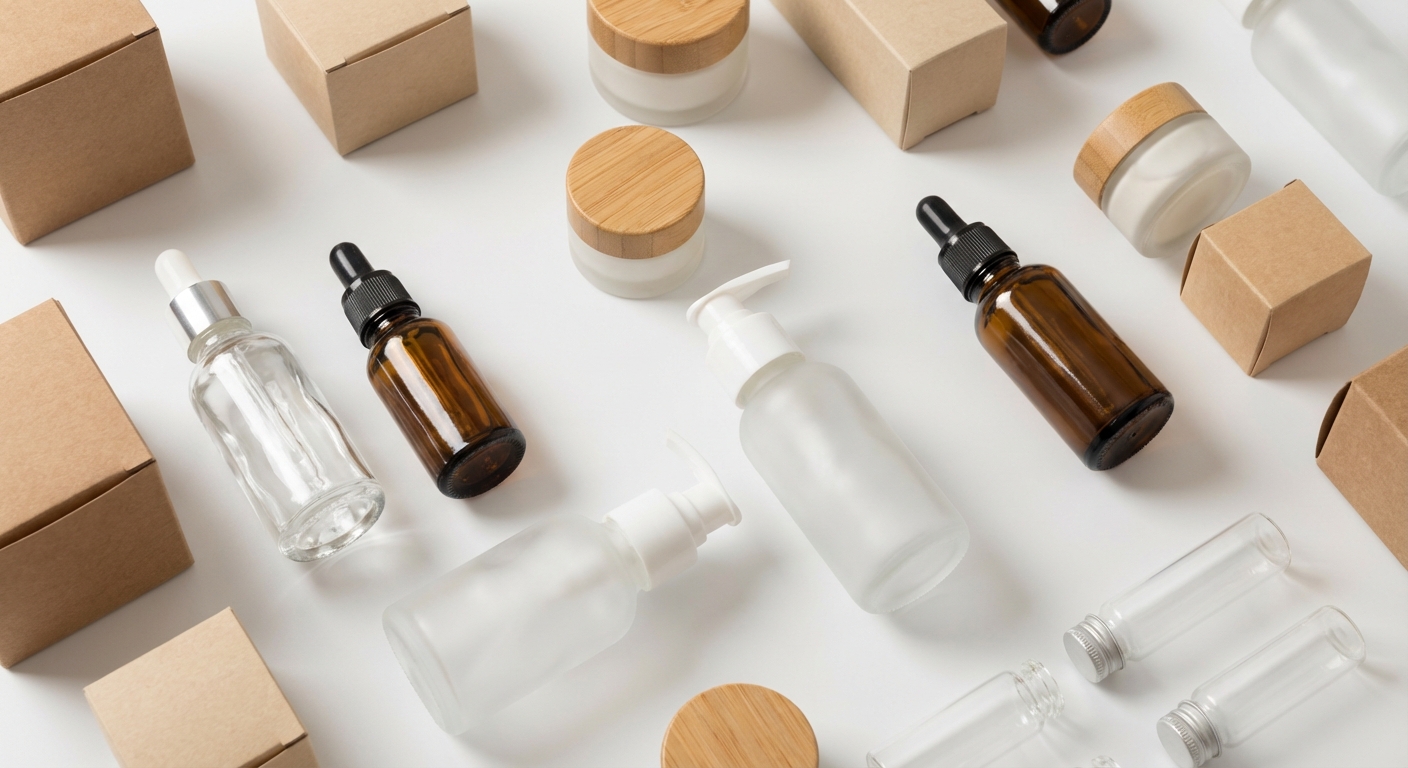
Most Korean manufacturers will tell you "minimum 3,000 to 5,000 units per order." At USD 4 per unit for an ampoule, 5,000 units means USD 20,000 in initial production costs alone. Add containers, boxes, and design fees, and you're looking at USD 25,000–30,000 or more.
The 3 Components of Cosmetics Unit Cost
The cost of manufacturing a single cosmetics product Made in Korea breaks down into three main categories:
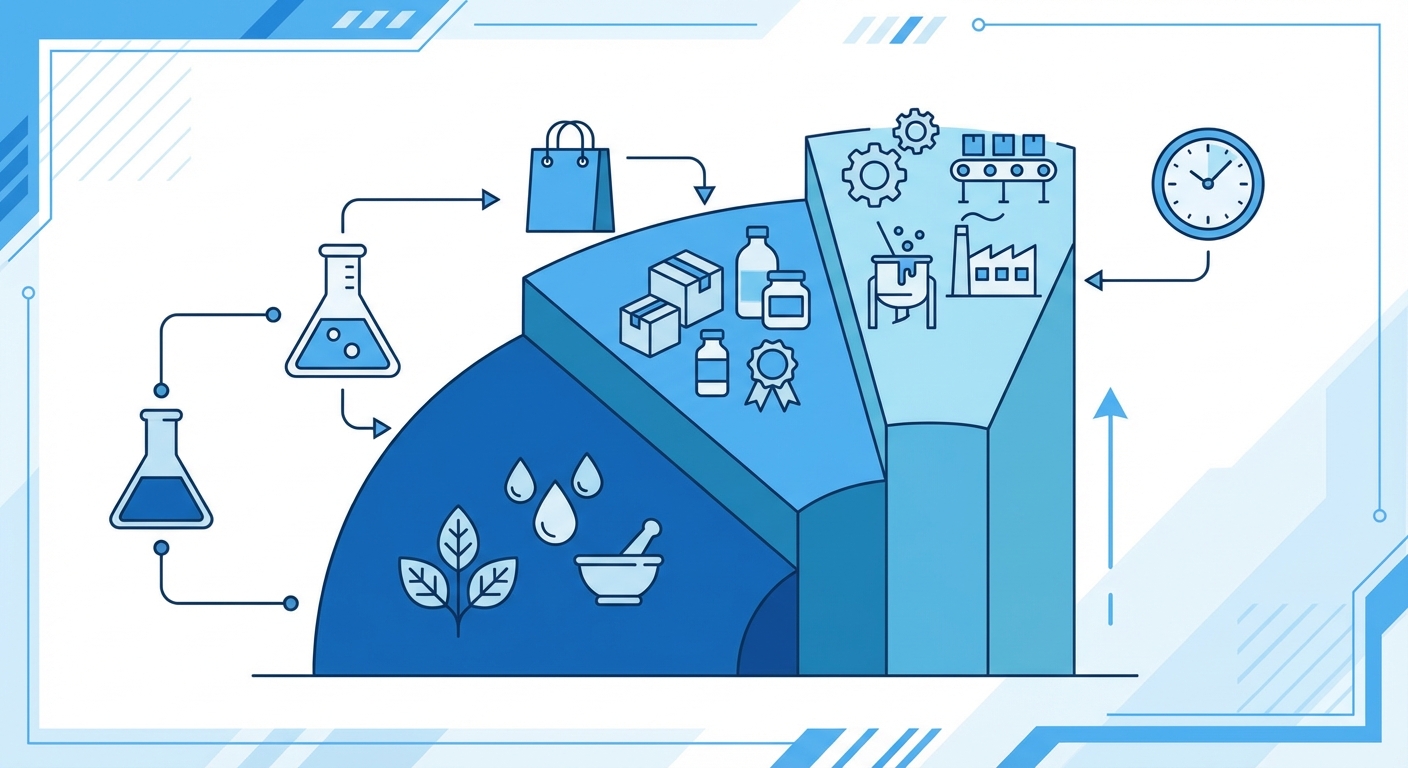
| Category | Description | Proportion (approx.) |
|---|---|---|
| Bulk (Contents) | Actual cosmetics liquid/cream ingredients | 20–30% |
| Packaging Materials | Containers, pumps, labels, boxes | 40–50% |
| Processing Fee | Filling, packaging, QC, labor | 20–30% |
Surprisingly, the largest cost component isn't the formula itself — it's the packaging materials. Whether you choose premium glass bottles or simple plastic containers can make a massive difference in per-unit cost. Additionally, quantity (MOQ) is king. At 1,000 units, the per-unit cost might be USD 4, but at 10,000 units, it could drop to USD 2.80 from a Korean GMP-certified factory.
So, How Should You Get Started?
Starting with large-volume production carries significant risk due to inventory burden. That's why the latest trend in K-Beauty manufacturing is "Low MOQ (small-batch production)". Even though per-unit costs are slightly higher, starting with 1,000 units, testing market response, and quickly re-ordering is the smarter strategy.
However, not many Korean manufacturers accept small-batch orders. HWAJAE connects you with verified small-batch production specialists — Korean GMP-certified factories that accept orders starting from just 1,000 units.
Get Your Manufacturing Quote in 30 Seconds
Calculate your estimated production cost right now.
Free Quote Calculator