K-Beauty exports surpassed $10 billion in 2025, cementing South Korea's position as a global beauty powerhouse. Fueled by K-drama and K-pop, Korean beauty products have become an essential part of daily routines for consumers across North America, Europe, Southeast Asia, and the Middle East. This guide covers everything you need to know to export K-Beauty products — country-by-country certification requirements, customs procedures, costs, and proven success strategies.
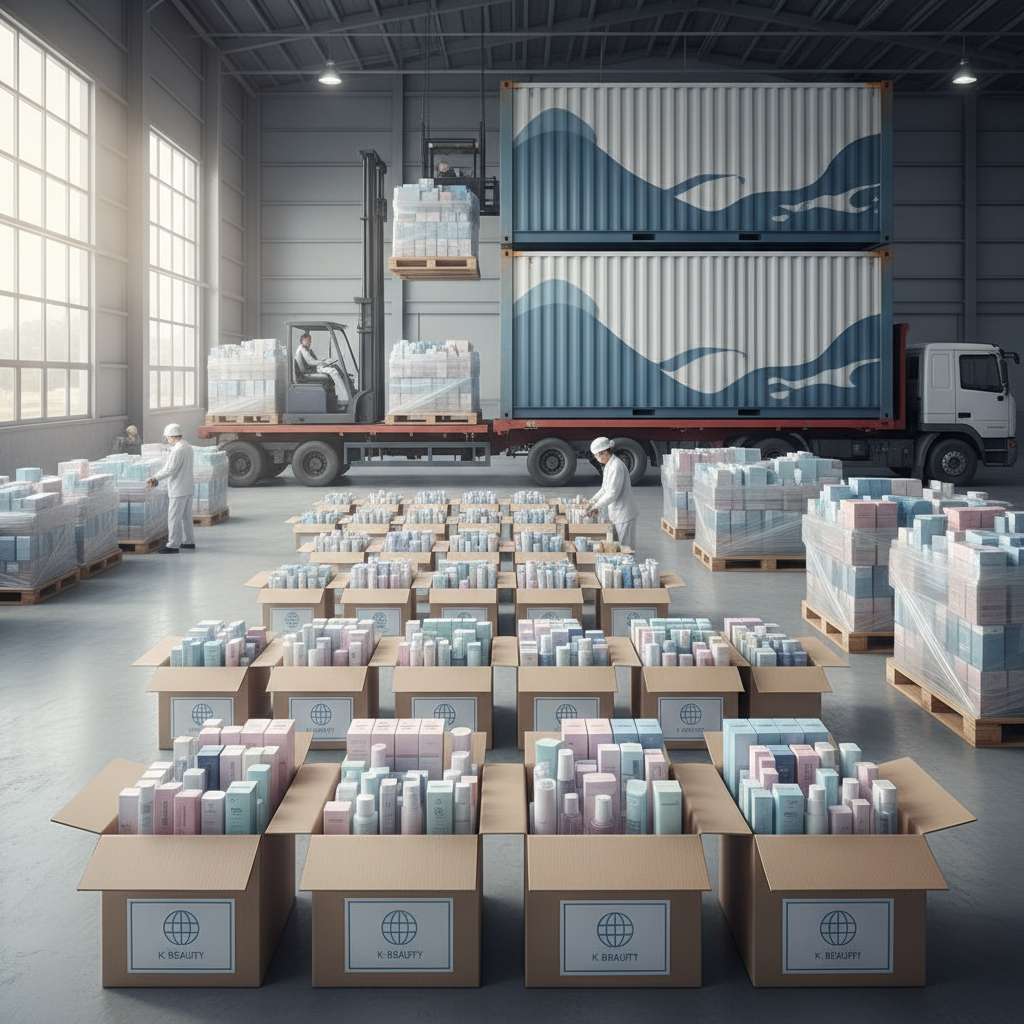
K-Beauty Export Market Overview
Korean cosmetics exports grew from $7.6 billion in 2020 to over $10 billion in 2025, achieving a compound annual growth rate (CAGR) of over 5.6%. Southeast Asia is the fastest-growing region with a 15% annual growth rate, while the US market recorded $1.8 billion in exports in 2025 — a 32% year-over-year increase.
- United States: K-Beauty products now hold 12%+ share of Amazon's beauty category, with multiple #1 rankings in sunscreen and serum subcategories
- Japan: K-Beauty sales on Qoo10 Japan and Amazon Japan grew 45% YoY, with cleansing and toner products leading the market
- Southeast Asia: K-Beauty transaction volume on Shopee and Lazada grew 15%+ annually, with Thailand, Vietnam, and Indonesia as key markets
- EU: Clean beauty and vegan trends drive 20% annual growth, centered in France and Germany
- Middle East: Surging demand for Halal cosmetics, 25% annual growth led by UAE and Saudi Arabia
Country-by-Country Certification Requirements
1. United States (FDA)
The US operates a post-market surveillance system rather than pre-market approval for cosmetics. Under MoCRA (Modernization of Cosmetics Regulation Act), enacted in 2023, FDA facility registration and product listing are now mandatory.
- FDA Facility Registration: Both manufacturers and distributors must register with the FDA (free, available online)
- Product Listing: All exported products must be listed with the FDA
- Ingredient Regulations: Check FDA prohibited/restricted ingredients; color additives require pre-approval
- Labeling: Full INCI ingredient listing in English, net weight, and country of origin required
- GMP: MoCRA mandates GMP compliance (ISO 22716 standard)
2. European Union (CPNP)
The EU enforces the world's most stringent cosmetics regulations. Under EU Cosmetics Regulation (EC No. 1223/2009), all products must be notified through the CPNP (Cosmetic Products Notification Portal).
- Responsible Person (RP): A Responsible Person based within the EU must be designated
- CPSR (Cosmetic Product Safety Report): Required for each product, prepared by an EU-based safety assessor
- PIF (Product Information File): Comprehensive documentation including manufacturing process, safety data, and GMP certificates
- CPNP Registration: Must be completed online before products can be distributed
- Banned Ingredients: Over 1,600 substances are banned; 26 EU allergen fragrances require separate labeling
3. China (NMPA)
China operates a pre-market approval system for cosmetics, classifying them into general cosmetics and special cosmetics. Regulations were further tightened with the new Cosmetics Supervision and Administration Regulation in 2021.
- General Trade Export: NMPA hygiene permit required. General cosmetics need Bei'an (filing) registration; special cosmetics need Zhuce (registration) approval
- CBEC (Cross-Border E-Commerce): Export via Tmall Global, JD Global, etc. without NMPA registration
- Animal Testing: Exemption for general cosmetics possible since 2023 (conditional)
- Chinese Labeling: Chinese-language labels mandatory for general trade imports
4. Japan (MHLW)
Japan classifies products into "cosmetics" and "quasi-drugs". General cosmetics can be exported through relatively simple procedures, but claims such as whitening or anti-wrinkle efficacy require quasi-drug approval.
- Marketing Authorization: A Japan-based import sales agent (Marketing Authorization Holder) is required
- Ingredient Regulations: Must comply with MHLW ingredient standards (negative list system)
- Labeling: Full ingredient list in Japanese, Marketing Authorization Holder details, and lot number required
- Quasi-Drugs: Functional claims require separate approval (6–12 months)
5. Southeast Asia (ASEAN)
The 10 ASEAN member states regulate cosmetics under the ACD (ASEAN Cosmetic Directive). With a 15% annual growth rate, Southeast Asia is the next major frontier for K-Beauty.
- CTD (Common Technical Document): Unified ASEAN product technical document format
- Country-Specific Registration: Individual registration required — Thailand (FDA Thailand), Vietnam (DAV), Indonesia (BPOM), Philippines (FDA Philippines), etc.
- Halal Certification: Effectively mandatory in Indonesia and Malaysia
- GMP: ISO 22716 or ASEAN GMP compliance required
Certification Costs & Timelines by Country
| Country/Region | Key Certification | Estimated Cost | Timeline | Difficulty |
|---|---|---|---|---|
| United States | FDA Registration + MoCRA | USD 3,500–15,000 | 2–3 months | Medium |
| EU | CPNP + CPSR + RP | USD 11,000–37,000 | 3–6 months | High |
| China (General Trade) | NMPA Hygiene Permit | USD 15,000–60,000 | 12–18 months | Very High |
| China (CBEC) | Platform Onboarding | USD 2,200–7,500 | 1–2 months | Low |
| Japan | Import Sales Registration | USD 2,200–11,000 | 2–3 months | Medium |
| Southeast Asia (ASEAN) | Country Registration + CTD | USD 3,500–22,000 | 4–8 months | Medium |
* Costs vary significantly based on number of products, ingredient complexity, and consulting firms. Korean government subsidy programs (export vouchers, etc.) can cover 70–90% of these costs.
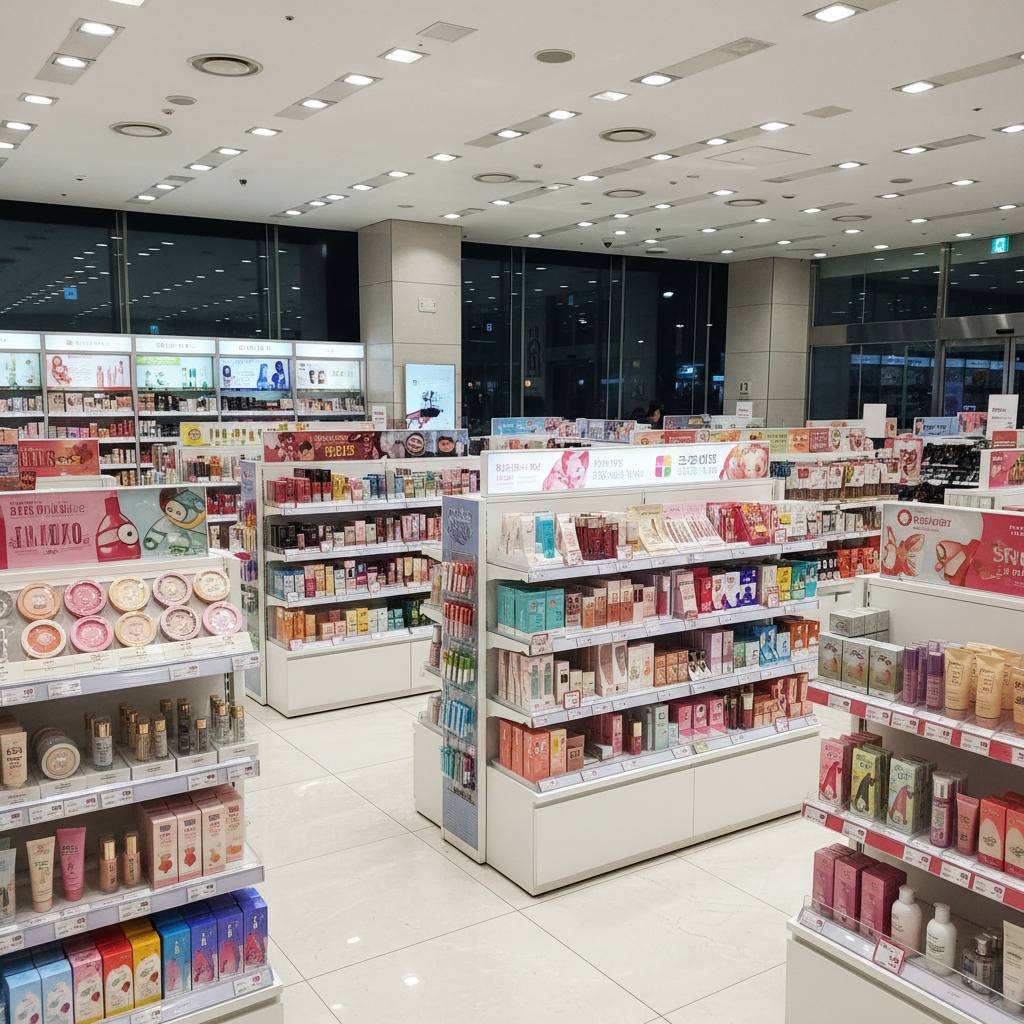
Export Customs & Logistics Process
Exporting K-Beauty products follows 5 key stages.
Stage 1: Obtain Destination Country Certification
Complete the certification requirements outlined above. Exporting without proper certification risks customs rejection or product seizure at the destination.
Stage 2: Prepare Export Labels & Packaging
Apply sticker labels in the destination country's language and prepare packaging that meets local regulations. Barcode registration (EAN/UPC) is also essential.
Stage 3: Export Declaration & Tariff Processing
File export declarations through a licensed customs broker. Cosmetics fall under HS Code 3304 (beauty/makeup preparations). Leverage FTAs — Korea-ASEAN FTA, Korea-EU FTA, KORUS FTA — for preferential tariff rates.
Stage 4: Logistics & Shipping
Choose between ocean freight (FCL/LCL), air freight, or international couriers (DHL, FedEx) based on volume and delivery deadlines. Temperature-sensitive products require cold chain logistics.
Stage 5: Destination Customs Clearance & Distribution
Once products clear customs inspection at the destination, local distribution begins. Having a local distribution partner significantly streamlines customs clearance and market entry.
K-Beauty Export Success Stories
Learn from the proven strategies of Korean brands that have successfully entered global markets.
- Beauty of Joseon: Achieved #1 in Amazon US sunscreen category, surpassing KRW 200 billion (~USD 150M) in 2024 revenue. Social media viral marketing and local influencer collaborations were key drivers
- COSRX: Conquered the US market through Amazon and Ulta Beauty, with Snail Mucin Essence becoming a global bestseller. Accelerated growth after acquisition by The Hyundae Global in 2024
- TIRTIR: Explosive US growth via TikTok virality — 'Mask Fit Cushion' reached #1 in Amazon's foundation category. Successfully localized with 40 shade options to serve diverse skin tones
- rom&nd: Entered Japan through Qoo10 Japan, Loft, and Plaza, capturing #1 market share in Japan's lip tint category. Limited-edition Japan-exclusive products drove Gen Z engagement
- SKIN1004: Madagascar Centella Ampoule became the #1 bestseller on Shopee across Southeast Asia. Simultaneous 5-country launch strategy generated KRW 150 billion (~USD 112M) in annual revenue
Practical Tips for Export Success
- Leverage Government Support Programs: KOTRA Export Voucher (up to KRW 100M / ~USD 75K), KCII overseas certification subsidies, and MSS Global Hidden Champion programs can cover 70–90% of export costs
- Localization Strategy: Go beyond simple translation — tailor product positioning to local consumer needs. US: diverse skin tone ranges. Southeast Asia: hot & humid climate formulations. Middle East: Halal certification
- Cross-Border E-Commerce First: Test markets through Amazon FBA, Shopee, Qoo10, and iHerb before committing to full-scale direct trade
- Attend International Trade Shows: Cosmoprof Bologna (EU), Cosmoprof Asia (Hong Kong), and NYSCC (US) are premier B2B events for connecting with international buyers
- Social Media & Influencer Marketing: Collaborate with local beauty influencers on TikTok and Instagram. User-generated content (UGC) drives authentic viral reach far more effectively than traditional advertising
Frequently Asked Questions (FAQ)
Q. What certifications do I need to start exporting K-Beauty products?
It depends on the destination country. The US requires FDA facility registration, the EU requires CPNP registration and CPSR, China requires NMPA hygiene permits, Japan requires import sales registration, and ASEAN countries require individual registrations. GMP (ISO 22716) certification is required or strongly recommended in virtually every market.
Q. Can small brands export K-Beauty products internationally?
Yes, absolutely. Cross-border e-commerce platforms like Amazon, Shopee, and Qoo10 allow small brands to test international markets with minimal upfront investment. For China, CBEC (cross-border e-commerce) enables exports without NMPA registration, significantly reducing initial costs and time-to-market.
Q. What are the labeling requirements for exported cosmetics?
Exported products must display full ingredient lists, usage instructions, warnings, country of origin (Made in Korea), and expiration dates in the destination country's language. Each country has specific requirements — the EU mandates PAO (Period After Opening) symbols, and the US follows FDA ingredient listing order. Applying country-specific sticker labels is the most common and cost-effective approach.
Q. What government subsidies are available for K-Beauty exporters?
KOTRA's Export Voucher program (up to KRW 100M / ~USD 75K, covering 70–90% of costs), KCII overseas certification support, and MSS Global Hidden Champion programs are among the key resources. Applications typically open early each year, so plan ahead.
Q. Can I export without GMP certification?
Most countries require or strongly recommend GMP (ISO 22716) certification. If you manufacture through an OEM/ODM partner that holds GMP certification, your brand does not need to obtain GMP separately. All manufacturers matched through HWAJAE hold GMP certification.
Get a Quote for Export-Ready Products
HWAJAE partners with 30+ GMP & ISO 22716 certified manufacturers. Get an estimated quote for export-spec products in 30 seconds.
Free Quote Calculator